Canada’s Proposed 100% Aircraft Expensing: Could It Accelerate the Aircraft Replacement Cycle?

Joseph Pennella
Founder and Principal Broker
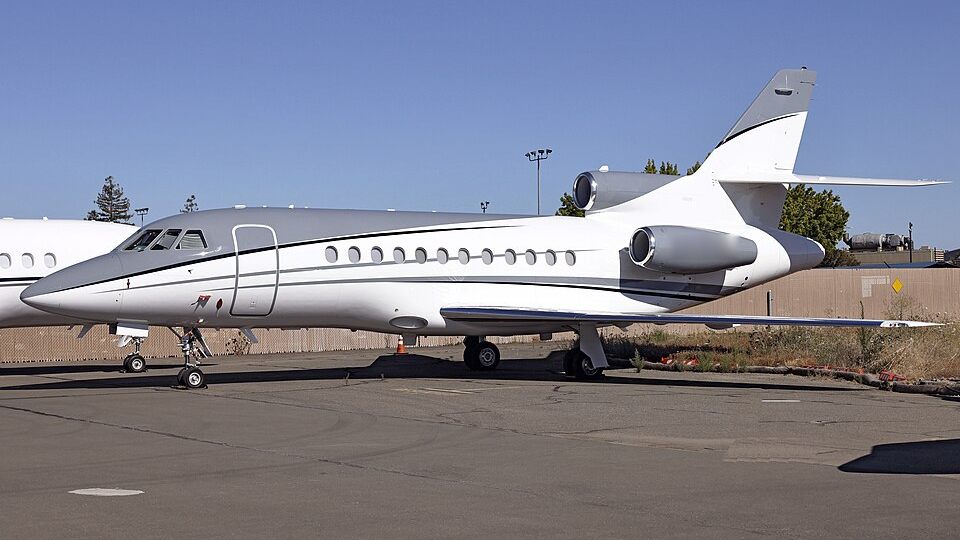
Photo: Duncan Kirk / Wikimedia Commons, CC BY 4.0. Modified from original.
Penn Jets was recently approached by a prospective client considering selling an existing aircraft and replacing it with a Dassault Falcon 900B. The conversation went quiet, in part because of current trade complexities. On September 15, 2026, Canada announced a proposal that made me think about that transaction again.
What Canada Is Proposing
Under the proposed Productivity Mega Deduction, a broad range of depreciable property acquired on or after September 15, 2026, including aircraft, would qualify for permanent immediate expensing. Instead of recovering an aircraft's cost gradually through the Capital Cost Allowance system, a qualifying taxpayer could deduct the full eligible amount in the year the aircraft becomes available for use.
To be clear, Canada is not changing an aircraft depreciation rate from 15% to 100%. The earlier Productivity Super-Deduction covered assets representing about 15% of capital investment. The Mega Deduction expands that to roughly two-thirds, now including aircraft.
It follows Canada's November 2025 repeal of its luxury tax on aircraft over $100,000. In less than a year, Canadian policy has moved from a luxury tax to a full first-year write-off.
Pre-Owned Aircraft Qualify
Used aircraft may qualify if neither the buyer nor a related party previously owned it and it was not transferred on a tax-deferred rollover basis. That opens the benefit to the U.S. pre-owned market.
Eligibility will depend on the final legislation and the buyer's circumstances. For individuals and partnerships with individual members, the draft rules limit the deduction to income from the business using the aircraft, and it cannot create or increase a loss.
Toronto and the Northeast
Toronto to New York, Boston and Philadelphia are short missions for midsize aircraft like the Citation Latitude, Challenger 350 and Praetor 500. Large-cabin aircraft like the Falcon 900 series fly the same routes while adding intercontinental range. U.S. buyers pursue the same aircraft.
If even some Canadian owners accelerate replacement, they enter the same pre-owned inventory. Once a buyer applies requirements for model, year, engine program and maintenance status, only a handful of comparable aircraft may be for sale. Any effect on values will likely show up first within individual models.
The Bombardier Question
On September 7, President Trump threatened to block Bombardier sales in the United States unless production moves to America, following a January threat to decertify Canadian-built aircraft. Implementation remains uncertain.
Canada's draft rules require certain passenger vehicles to be assembled in Canada but do not appear to impose a similar requirement on aircraft. Some Canadian demand could therefore flow toward U.S.-built Citations and Gulfstreams, French-built Falcons, Brazilian-built Embraers and pre-owned Bombardiers already on the U.S. market.
Canada has also imposed retaliatory tariffs on U.S. goods, so buyers should confirm whether any countermeasures affect a U.S.-sourced aircraft. Cross-border deals should involve Canadian tax advisors and aviation counsel alongside the broker, escrow and title professionals.
What Owners Should Consider
Eligibility under final legislation
Ownership structure and business use
Available-for-use timing
Current aircraft value and upcoming maintenance
Registration, import and tariffs
Financing and cash flow
The deduction should support a sensible acquisition, not turn the wrong aircraft into the right one.
Final Approach
For Canadian owners contemplating an upgrade, September 15, 2026 could become an important acquisition-date threshold. For American sellers, the question is whether some of that investment moves south. The transaction that crossed our desk went quiet, but the economics behind deals like it have become considerably more interesting.
Joseph Pennella
Penn Jets LLC
Sources: Department of Finance Canada, Sept. 15, 2026; Aviation International News, Sept. 18, 2026 and Nov. 6, 2025; Associated Press, Sept. 8, 2026.
Proposed legislation as of September 2026. General market information only; not tax or legal advice.