Five Hours Down, Three Days Back: Private Aviation and the FAA Ground Stop

Joseph Pennella
Founder and Principal Broker
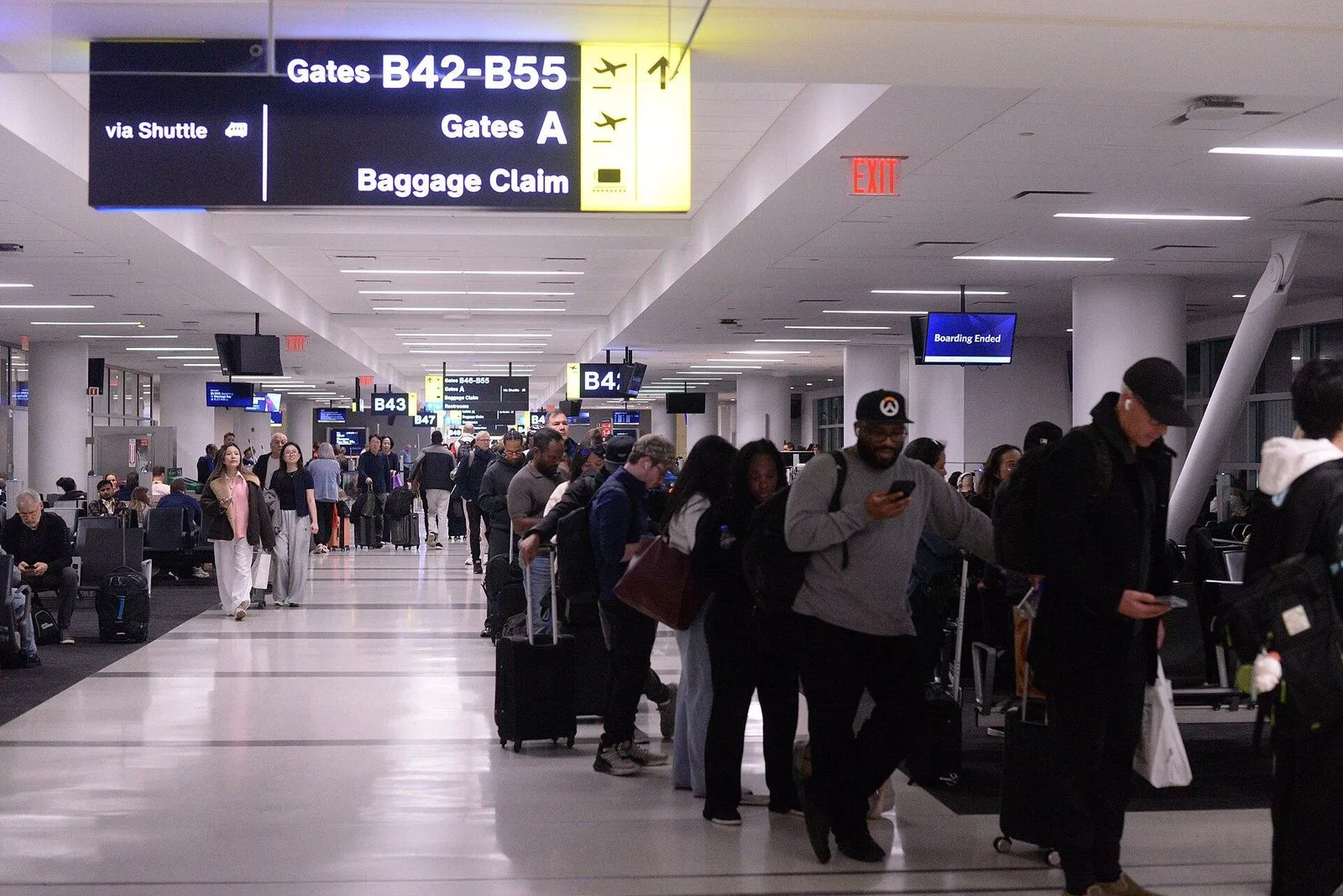
Photo: Sashimi-b, CC BY-SA 4.0.
I had this piece framed wrong when I started it, and the operators on the record corrected me.
My assumption was the obvious one. A nationwide ground stop should hurt airlines worse than private aviation, however, an airline has a network to untangle and a single airplane does not. Hold departures for five hours and an airline loses crew duty days, aircraft sequencing, and the empty seats it needs to rebook everyone. One airplane with one crew has none of that support to rebuild. I thought the story was asymmetric recovery.
Half of that was right. The half I had wrong is the half worth writing down.
Inside the stop
The FAA issued the stop at about 3:30 p.m. Eastern on November 13 and says air traffic resumed as of 8:15 p.m. — just under five hours. The agency attributes it to data flooding its FTI network at roughly 1,000 connection attempts every four to five seconds, traced initially to a radar site in Amarillo, Texas and a radio site in El Dorado, Arkansas, where network provider L3Harris had been deploying a new router. The FAA says it has no indication of a cyberattack and that the root cause remains under investigation (FAA, "Nationwide Ground Stop: Questions and Answers").
Private aviation came through those five hours well. Trade reporting at the time described the stop as halting nearly all U.S. departures, private jets included (Private Jet Card Comparisons, November 13). But aircraft already airborne were allowed to continue, and that is where the difference showed. fly Exclusive chairman Jim Segrave said nearly two dozen of his company's airborne flights reached their planned airports with no ramp-space problems. Magellan Jets president Anthony Tivnan said all of his company's airborne flights landed and customers were not delayed. Monarch Air Group CEO David Gitman said one customer was affected, arriving half an hour late.
That is what the product is supposed to do, and it did it. No tarmac hold, no terminal, off the airplane through an FBO.
After the stop
Then the people who actually move these airplanes said the following days would be harder for them than for the airlines, and explained why.
Charter and fractional pilots work to a 14-hour maximum duty day and need 10 hours of uninterrupted rest (Private Jet Card Comparisons, November 13). A five-hour hold burns a charter crew's day exactly as it burns an airline crew's day. The difference is what happens next: airlines hold reserve crews, and private operators generally do not.
It gets more specific. Aviation Portfolio CEO Craig Ross noted that large operators rotate crews on seven-to-eight-day shifts and fly them in on airlines to meet the aircraft — so a fractional or large-fleet charter operator's recovery depends in part on the airline network recovering first. Ross told fractional clients to stay where they were until at least Sunday: "Flexibility is the word of the day." Unity Jets president Kevin Diemar expected several days to restore schedules. TLC Jet president Justin Firestone put it at three days minimum and expected demand to outrun supply. Gitman called the next few days "a logistical nightmare." One senior operator of large private jets, speaking anonymously, said "all aircraft are created equal during ground stops," but that "when the system comes back online, we tend to see commercial aviation prioritized first."
Set that against the airline side. FlightAware counted more than 5,100 flights canceled on Saturday within, into or out of the United States (via AP), and FAA Administrator Bryan Bedford said the national schedule should be back to normal by the end of Sunday. The FAA's own tally puts total cancellations at about 12,462, of which 9,082 were by major airlines, while noting not all were directly caused by the stop.
The FAA was projecting the airline schedule normal by Sunday night. Several private operators were telling their own clients three days or more.
What this tells a buyer
Recovery speed does not track whether you fly privately. It tracks how dedicated your lift is.
An owner with one airplane and a dedicated crew has the fewest moving parts and the most say over which trip moves first. That is the real asset, and it is not speed — it is decision rights. Nobody optimizes your airplane into someone else's trip.
Fractional sits in the middle. There is a network to untangle, and the crew assigned to your aircraft may be sitting in the same airline terminal as everyone else.
On-demand charter is the exposed end. When the system reopens, everyone who got stranded wants lift in the same hour, and you are bidding into that. Firestone's "demand will outpace supply" is the polite version.
The honest part
Private aviation is often sold as a way to fly around disruption. On November 13 it bought a materially better five hours — passengers landed where they were going and walked out through an FBO instead of sitting on a taxiway. It did not buy immunity from the recovery, and for anyone on fractional or charter it may have bought a harder one.
If you are weighing those three structures, that distinction is worth more than any brochure line about flexibility. One five-hour software fault is not a market cycle, but it tested the same structural question an acquisition does: how much of your access depends on somebody else's network being healthy.
And if you were holding a charter contract that weekend, read the cancellation terms rather than assuming. Several operators were calling flights delayed rather than canceled, and the two are not the same thing for the customer. Confirm with your advisor.
Joseph Pennella, Penn Jets LLC
Sources
Accessed November 16, 2026.
Federal Aviation Administration, "Nationwide Ground Stop: Questions and Answers" — timing, cause, L3Harris router, cancellation tallies
Private Jet Card Comparisons, "Here's how the FAA ground stop is impacting private jet flyers," November 13, 2026 — scope of the stop, duty and rest limits, reserve pilots, operator quotes
Private Jet Card Comparisons via Yahoo Finance, "Many Private Jet Flyers Avoided The FAA Meltdown, But The Worst Is Ahead," November 2026 — Segrave, Tivnan, Gitman, Firestone, Diemar, Ross quotes
FlightAware via Associated Press, reported by PBS NewsHour, November 15, 2026 — Saturday cancellation count; Administrator Bedford on recovery timeline
General market information only; not tax or legal advice.