Jet Charter vs. Ownership: Making the Right Choice

Joseph Pennella
Founder and Principal Broker
The Big Question,
Private aviation gives you freedom and efficiency that commercial travel can’t. But before taking that leap, there’s one question that determines everything: should you own or charter your aircraft?
I’ve seen it firsthand. My father was an avid aviator for many years and an owner-operator himself. Growing up around him and his associates, I’ve seen this debate play out since childhood. Now in my late twenties, working in the aviation world myself, I hear the same conversation between new buyers, legacy operators, and Part 91 flyers. One of my earliest mentors, Steven Smyth, a veteran pilot and the owner of KLM Aviation Inc., a Part 135 operator based in Fort Lauderdale, shared lessons with me that still hold true today.
What I’ve learned is this: the lifecycle of aircraft ownership is rarely what prospective buyers imagine. Many new owners underestimate the ongoing costs, management responsibilities, and operational complexity. Private aviation is expensive, but with the right team behind you, it can also become a cash-flowing investment rather than a financial burden.
In today’s market, you have multiple options: jet cards, charter programs, fractional ownership under Part 91, or shared operations under Part 135. This conversation surfaces across every corner of private aviation, from legacy operators to first-time buyers. So, should you own or charter?
At Penn Jets, we help clients look at both the numbers and the lifestyle behind each choice. Here’s what really matters when deciding how to travel privately.
Understanding the Basics
Ownership means buying an aircraft outright, financing it entirely, or acquiring a share through a fractional program. Ownership gives you control over scheduling, customization, and management, and with the right consulting and management team, it can also provide meaningful tax advantages. Without the right support, your new aircraft can quickly start controlling you instead of the other way around. Both Part 91 (private use) and Part 135 (charter) ownership come with fixed costs including maintenance, crew, insurance, hangar space, and management. The difference lies in their purpose and level of FAA regulatory compliance.
Under Part 135, an aircraft can legally generate charter revenue when operated in full compliance with FAA rules, standards, and oversight. Under Part 91, the operator is limited to private use only, meaning the aircraft cannot carry paying charter clientele. Both structures may still qualify for significant tax benefits, including potential bonus depreciation of up to 100 percent in the first year of ownership. To qualify, the aircraft must generally be used at least 50 percent for business purposes and meet individual financial and tax requirements.
Charter allows you to pay only when you fly. It’s flexible, straightforward, and commitment-free. You can choose aircraft types based on each trip and avoid the long-term responsibilities of ownership, a clean getaway for many travelers.
Cost Overview
When deciding between owning or chartering, the first factor that comes into play is cost. Ownership requires a significant upfront investment, anywhere from around one million dollars for a light jet to well over seventy million for a large cabin aircraft. Fractional ownership programs typically start between two hundred thousand and two million dollars depending on the share size and aircraft type.
Beyond the purchase, owners take on ongoing expenses: fuel, maintenance, insurance, hangar fees, crew salaries, and management oversight. These costs are fixed whether the airplane flies or not. The advantage is that once those fixed expenses are managed, the hourly cost of ownership can become lower than chartering, especially for high-utilization flyers.
Charter, on the other hand, comes with no long-term financial commitment. You pay only when you need to fly. The hourly rate is higher, but it includes everything such as fuel, crew, maintenance, and insurance, making it a predictable, one-line cost per trip. For travelers whose flight hours vary from month to month or season to season, this flexibility often outweighs the higher hourly rate.
If you fly often, owning may eventually reduce your overall cost per hour. But if your schedule is unpredictable or business travel is intermittent, chartering nearly always provides better value.
Control and Flexibility
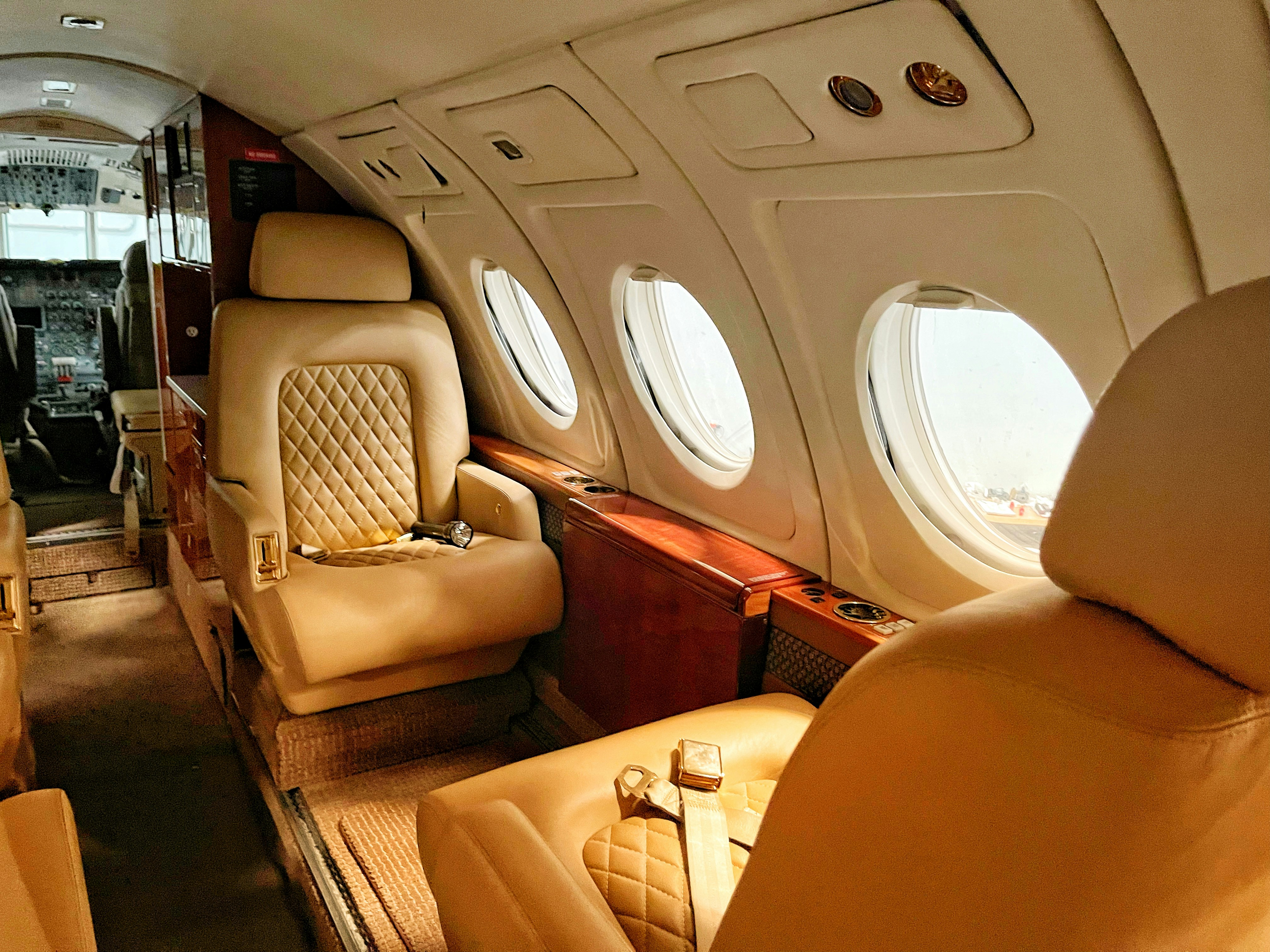
Ownership means complete control. Your aircraft is available whenever you need it, ready to depart on your schedule. You can tailor the cabin design, technology, and onboard experience to your taste and maintain the same crew and configuration every flight.
Charter focuses on variety and ease. You can choose the right aircraft for each mission, light jets for short hops, midsize for regional routes, or large cabin aircraft for international trips. There’s no downtime, no maintenance planning, and no fixed expenses when you’re not flying. For most travelers, that simplicity is the main appeal.
If you fly frequently and want guaranteed availability and familiarity, ownership wins. If you value flexibility and variety, chartering gives you more freedom without the burden of management.
Flight Frequency
In practical terms, the number of hours you fly each year often dictates the right choice. Travelers logging fewer than fifty hours annually tend to benefit from on-demand charter. Those flying closer to one hundred hours often explore jet cards or memberships for more predictable pricing. Between one hundred and three hundred hours, fractional ownership can make sense. Beyond that threshold, full ownership usually provides the greatest efficiency and control.
Tax and Depreciation
For business owners, aircraft ownership can offer substantial tax advantages. Under Section 168(k) of the U.S. tax code, qualifying aircraft may be eligible for one hundred percent bonus depreciation in the first year if used primarily for business purposes. This allows owners to offset a large portion of the purchase price against taxable income.
Charter users, by contrast, can generally only deduct travel expenses related directly to business use. The tax difference between owning and chartering can be significant, so it’s essential to consult an aviation-focused CPA before making any purchase. The way the ownership entity is structured will determine eligibility for depreciation and deductions.
Lifestyle and Brand
Aircraft ownership is often as much about image and convenience as it is about travel. For many executives and business owners, it represents control, privacy, and reliability, values that reinforce credibility in front of clients and partners.
Charter delivers a similar luxury experience with far less responsibility. You still arrive in comfort, on your schedule, without worrying about maintenance or crew logistics. For entrepreneurs or families who fly occasionally, it’s often the smarter, cleaner way to access private aviation without the long-term financial commitment.
Hybrid Options
More flyers today are blending the two models. Fractional ownership programs like PennShare offer predictable costs, equity participation, and access to professionally managed aircraft without taking on full ownership. Leaseback programs can offset expenses by generating charter revenue when your plane isn’t in use. And jet card memberships provide guaranteed availability at fixed hourly rates, ideal for those who want consistency without full ownership responsibilities.
Final Approach
In the end, the right path depends on your flying habits, your business needs, and your financial goals. If you’re traveling frequently and want full control, ownership offers unmatched convenience and long-term value. If you prefer flexibility, lower commitment, and minimal management, chartering remains the most efficient choice.
At Penn Jets, our goal is to help clients calculate their true cost per flight hour, factoring in usage, depreciation, and potential revenue opportunities, so every decision is backed by accurate numbers. We can give you a clear understanding of what private aviation really costs, and btw, the answer is not time.