Q3 2026: The Quarter Where the Paperwork Started to Matter

Joseph Pennella
Founder and Principal Broker
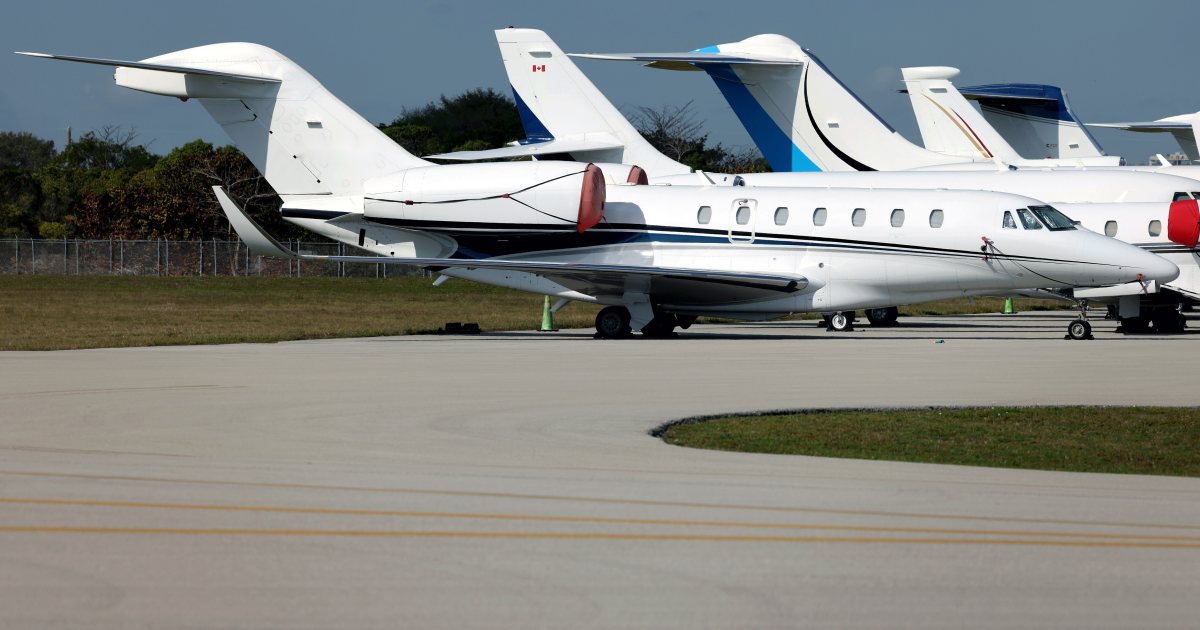
Photo: Duncan Kirk / Wikimedia Commons, CC BY 4.0. Modified from original.
Business aviation closes the third quarter with an unusual split. People are flying more. They are buying less. And for the first time in a while, the reason has less to do with the aircraft and more with where it was built and who is buying it.
Flying Up, Trading Down
Global business aviation flight activity rose 5.6% year over year in July, and North American activity climbed 4.3%, with fractional operators up 10% and Part 135 charter also gaining. Europe posted its first yearly decline in fourteen months. Global Business Aviation Flight Activity Surges 5.6 Percent in July 2026 – Aviation News +2
Transactions told a different story. Pre-owned whole-aircraft transactions totaled 1,115 in the first half, down 10.8% from the same period in 2025. Much of that gap is an echo: the tariff announcements of early 2025 pulled a large number of deals forward, and demand itself was largely unaffected. JetnetJetnet
Utilization is not the problem. Transaction friction is. Three events in Q3 explain most of it.
July 10: The Tariff That Was Held in Reserve
The administration ordered 180 days of talks rather than immediate Section 232 tariffs on commercial aircraft, jet engines and parts, sparing a sector with a $75 billion trade surplus while keeping the duties available. Brussels separately extended its suspension of retaliatory duties on American aircraft and parts, keeping roughly $4 billion in potential European retaliation off the table. PeacocktariffconsultingPeacocktariffconsulting
For anyone planning a cross-border transaction, this is the date to circle. The talks window runs into early January. A deal structured now under one set of assumptions may close under another.
August 21: U.S.–Canada Talks Collapse
Trade negotiations between the two countries broke down on August 21, followed by tariffs and threats, with Canada retaliating with tariffs on roughly $20 billion of U.S. goods. ClickOrlando
North America is a single aircraft market in practice. Toronto and the northeastern U.S. trade aircraft constantly. When the trade relationship gets complicated, so does every transaction that crosses the border.
September 7: Bombardier
The President posted that Bombardier can no longer sell in the United States unless it manufactures there. Bombardier responded that many components, including the wings, are built in the U.S., and that its supply chain includes about 2,800 American companies across 47 states. The threat would affect large fractional buyers, including NetJets, one of Bombardier's biggest customers. Trump threatens to block Canada’s Bombardier sales unless planes made in US | Donald Trump News | Al Jazeera +2
It was not the first such threat this year. In January, the President threatened to decertify Bombardier's large-cabin jets and all aircraft made in Canada, and to impose 50% tariffs on new planes. Nothing has been implemented. That may be the point worth making: the threat itself changes buyer behavior without a single rule being written. Al Jazeera
September 15: Canada Moves the Other Way
Canada announced its Productivity Mega Deduction, allowing businesses to immediately deduct 100% of the cost of a much broader range of investments. The measure raises covered assets from roughly 15% to more than 65%, and aircraft are explicitly on the list. Used property can qualify, provided neither the buyer nor a related party previously owned it and it was not acquired on a tax-deferred rollover. Productivity Mega Deduction Lowers Canada’s Investment Tax Rate +2
It follows Canada's repeal of its aircraft luxury tax in November 2025. Within a year, Canadian policy moved from taxing business aircraft to writing them off in full. We covered the implications for the U.S. pre-owned market separately.
What Actually Changed This Quarter
Country of manufacture, import history and ownership structure are now transaction variables, not footnotes. A buyer can be right about the airplane and still be surprised at closing.
Three practical consequences:
Diligence starts earlier. Export history, import structure and country of origin belong in the first conversation, not the week before closing.
Timing has a cost. With a tariff decision pending and a Canadian incentive dated to September 15, the calendar now carries real dollars.
The team is larger. Customs and tax counsel now sit alongside the broker, escrow and title on cross-border deals.
On the operating side, the same quarter's flight-activity numbers argue that demand is intact. Owners are using aircraft heavily even while deciding to wait on transactions, which is usually a sign of deferred activity rather than lost activity.
Looking to Q4
Watch the tariff talks window, the Canadian legislation as it moves from proposal to enacted law, and whether the fourth quarter delivers the transaction volume the first half deferred. Argus forecast North American flight activity to rise 3.5% year over year in the second half. Aviationnews
The aircraft market has absorbed worse. But Q3 was the quarter that made clear that in 2026, how a deal is structured matters as much as what is being bought.
Joseph Pennella
Penn Jets LLC
Sources: Argus TraqPak via AIN and AviationNews, July 2026 activity; JETNET JIQ Market Barometer, July 2026; Peacock Tariff Consulting, July 10, 2026; Associated Press and Reuters, September 7–8, 2026; Al Jazeera, January 30, 2026; Department of Finance Canada and Prime Minister's Office, September 15, 2026.
Market commentary only. Not tax, legal or investment advice.