September 11 and the Evolution of Private Aviation
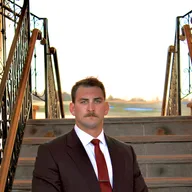
Joseph Pennella
Founder and Principal Broker
September 11, 2001, changed aviation forever.
Before discussing what those changes meant for private aviation, aircraft ownership, fractional programs, and charter, it is important first to remember the nearly 3,000 people who lost their lives, the first responders who answered the call, and the families and communities whose lives were forever changed.
The effects of September 11 extended throughout aviation. The United States entered an entirely new security environment, and both commercial and general aviation were required to adapt to new procedures, restrictions, regulations, and expectations.
Private aviation changed as well.
A Changing Relationship With Private Aviation
Flying privately means something different to every individual who uses it. Some pilots own and fly their own aircraft. Some individuals own an aircraft outright and rely on a professional crew or management company. Others participate through fractional ownership, while many use charter for intermittent travel or immediate transportation needs.
In the period following September 11, travelers began looking at these options differently.
A 2002 report from the University of California, Berkeley’s Institute of Transportation Studies cited an Air Charter Guide survey that found demand for air charter services increased approximately 30% following September 11. The report also stated that 84% of respondents continued to experience increased inquiries after October 2001 and noted increased activity among fractional aviation operators.
Those numbers represented more than simply an increase in demand. They reflected a changing relationship between travelers and aviation.
Private aviation had always offered flexibility, efficiency, and access. Following September 11, the ability to exercise greater control over an itinerary, choose airports closer to a destination, establish relationships with trusted operators, and reduce dependence on large commercial terminals became increasingly meaningful to many travelers and businesses.
Aviation Adapts
At the same time, general aviation itself faced substantial changes and restrictions. Aviation security became an even greater national priority, and the regulatory environment continued to evolve.
Today, the FAA maintains an extensive framework governing aircraft operations, pilot qualifications, maintenance, commercial operators, and aviation safety. Security procedures and operating standards throughout the aviation industry have continued to develop during the twenty-five years since September 11.
But one of the most important aspects of private aviation cannot necessarily be measured by regulation, aircraft performance, or flight time.
It is trust.
The Value of Trust and Continuity
There is tremendous value in having a routine you trust and people you trust.
Aircraft owners and private aviation clients often develop long-standing relationships with pilots, management companies, operators, maintenance professionals, brokers, FBOs, and other members of the general aviation community.
Over time, those relationships create continuity.
You know who is operating the aircraft. You know who is maintaining it. You know who to call when a mission changes. And you develop a group of aviation professionals who understand your aircraft, your expectations, and the way you travel.
That level of familiarity and continuity is one of the characteristics that continues to separate private aviation from commercial travel.
Twenty-Five Years Later
Twenty-five years after September 11, aviation is unquestionably different because of what happened that morning. Security procedures evolved. Regulations changed. Airports changed. And the way Americans think about air travel changed with them.
As I fly into Norfolk, Virginia, today for a wedding, there is a different kind of feeling in the air.
Traveling on September 11 carries a sense of reflection that is difficult to ignore. Looking out the window and thinking about aviation, travel, family, and the reason for today’s journey makes the significance of this date especially present.
It is a reminder that behind every aircraft and every trip are people traveling to something important—a wedding, a family gathering, a business meeting, or simply home.
And it is a reminder of how deeply September 11 changed aviation, our country, and the lives of so many families.
We Will Never Forget
Today, Penn Jets pauses to remember those who were lost, those who responded, and the families and communities that continue to carry the consequences of September 11.
We will never forget.
Written by Joseph Pennella
Penn Jets LLC
Historical aviation statistics referenced in this article are from “The California Aviation System: Current Status and Recent Trends,” published in 2002 by the University of California, Berkeley Institute of Transportation Studies.